“Respect Us, Protect Us, Pay Us”: Long Beach Refuse Workers Confront Budget Cuts and Wage Stalemate

Last month, Long Beach City Manager Tom Modica published a budget proposal that would eliminate 483 positions, including 220 vacant and 263 current jobs. Mayor Rex Richardson offered some relief, restoring roughly 70 positions. Even with those changes, city officials estimate that about 180 city employees will still lose their jobs—around 4% of Long Beach's nearly 6,000‑person workforce.
During Tuesday's City Council meeting, Councilwoman Cindy Allen said 237 city employees have already been reassigned or lost their jobs under the new budget. "This was a really tough week," she admitted, as she described a wave of staffing changes and service reductions.
Most of those cuts hit parks programs and teen programming, library hours and branches, police patrol and quality‑of‑life officers, Fire Engine 14 and some management positions, and homeless services—including outreach, shuttle service, motel vouchers, and Multi‑Service Center supports.
Refuse and solid waste workers haven't faced the same headline cuts this year. The 2026 fiscal budget moved solid waste management programs—Refuse, Organics and Recycling—from Public Works into the newly created Energy and Environmental Services Department, and officials say operational trash collection is not slated for major reductions in the FY 2027 plan.
Administrators and support positions within the department could still be on the chopping block, and workers say the budget crisis is exposing long‑standing problems with their pay and protections. Despite staff reductions throughout the city, refuse workers have been negotiating for higher wages for the past five months.
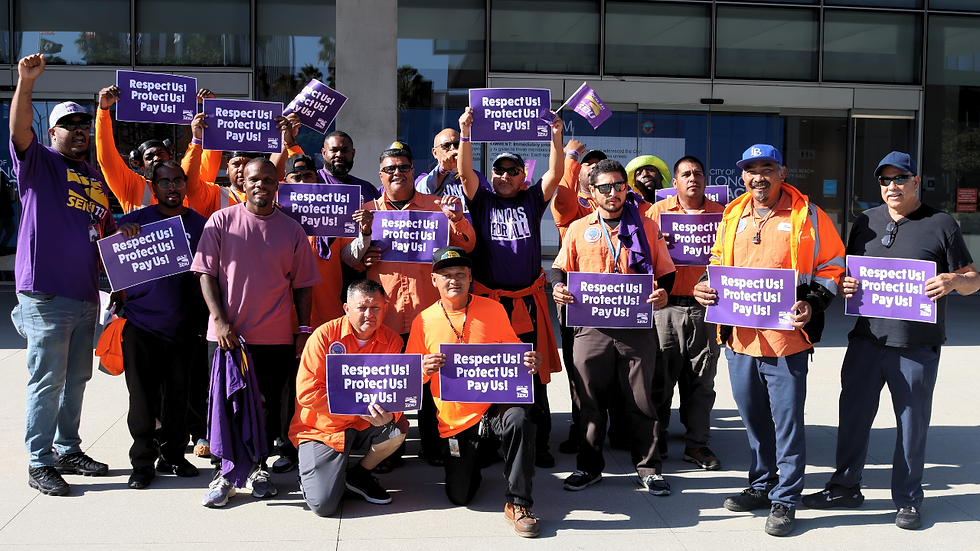
On Tuesday, they packed the Council chambers to address their frustrations and make their demands public, rallying behind one simple message: "Respect us. Protect us. Pay us." Refuse Operator Kenneth Williams told the Council that their ask starts with dignity.
"In the famous words of Aretha Franklin, all we need is a little respect," Williams said. "We deserve it. Respect isn't just something you say. Respect means recognizing the essential work we perform every day.” Respect means listening to the people doing the job, providing safe working conditions and competitive pay, and giving us the resources we need to serve the city,” he added.
Refuse Operator Derrick Bevins echoed that sentiment and reminded officials that trash collection is a public‑health job long after pickup day is over. "Most people think about trash collection on pickup day. For most of us, it's every day," Bevins said. "We help prevent disease, keep neighborhoods clean, protect the environment, and provide one of the most essential public services this city offers."
“We work around hazardous waste, biohazards, overflowing trash, homeless encampments, and materials that can expose us to serious illness,” he added. “Those risks deserve to be recognized through stronger safety protections and a contract that reflects the reality of our job.”
Refuse Operator Edi Carbrajal reminded the council that the department consistently loses refuse workers to neighboring cities that pay higher wages. That loss has a cost.
“Every time that happens, the city loses valuable knowledge and experience,” he said. “Added to that, the city loses valuable investment poured into employees. Recruiting and retaining skilled workers should be a priority because a stable workforce means better service for Long Beach residents.”
Anthony Holmes is not only a refuse worker in the city; for years he has fought to end discrimination within the department. He established the Coalition Against Anti‑Blackness not just to challenge racism within the refuse ranks, but to advocate for Black workers throughout the city and the state.
While his fight is for all Black workers, Holmes said he has rarely received support from his co‑workers. Although several colleagues joined him Tuesday to demand a competitive wage, he believes his fight for racial equality and equity will likely return to a solo mission next week.
"It's upsetting," he said. "A lot of people move when it's money involved. But when it's Black worker issues all over the city, all over the country, nobody wants to move for nothing."
Even so, several Black workers showed up on Tuesday. Holmes said that while the turnout disappointed him, it won’t deter his work. "It starts with one person in every little sector," he said. "I deal with it. I just don't let it affect me mentally.”
Although refuse workers are permitted to share their thoughts during public comment, they are not permitted to speak publicly about the closed‑door negotiations. Following their public statements, Mayor Richardson thanked them for attending the council meeting and encouraged negotiations to continue in good faith.


Comments